Showing posts with label Celebrity Series. Show all posts

Saturday, May 4, 2013

Hampson is as Hampson does

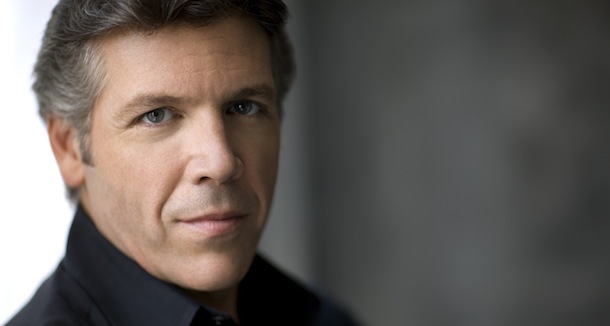
Thomas Hampson, baritone


I'm late with an appreciation of last weekend's appearance by Thomas Hampson at Celebrity Series (who wrap their season this month with the annual Alvin Ailey visit, btw).  And as usual, when I've been dragging my feet, it's because I've got bad news.  The great baritone was in fine voice, mind you - and his co-stars for the evening, the Jupiter String Quartet, likewise made a strong impression.

It was their program that didn't quite enthrall me.  It featured an appealing, but early, Schubert quartet - as well as an exquisite Webern piece which the Jupiters played superbly.  But the centerpiece of the concert - and a New England premiere - was Mark Adamo's setting of Billy Collins' Aristotle, which proved a strange misfire; and the program wrapped with a series of Hugo Wolf lieder that felt like one long appetizer rather than a main course.

On the other hand, it was wonderful just to hear Hampson (if only we could attract him to the Hub for a full operatic performance!).  At 57, this lyric baritone hasn't lost his elegant, maple-hued timbre (nor his personal elegance, either), and his sound is still of striking size - indeed, the very walls of Jordan Hall often vibrated in resonance with his power chords (as it were); Hampson might need a microphone in Gillette Stadium, but that's about it.

He also exuded a collegial, collaborative spirit with the Jupiters, who were actually the first to take the stage, with Schubert's Quartet No. 10 in E-Flat.  Written when the composer was all of sixteen, the piece pushes at the limits of Haydn with brilliant exuberance.  The Allegro is stuffed with sweetly singing lines, while the Adagio is a gently rocking lullaby, and the Scherzo all but kicks up its heels.  We can feel the adolescent Schubert showing us everything he can do, which consistently charms; but the final effect is diffuse (if virtuosic).  Still, the Jupiters gave a sympathetic, insightful account of the piece, and aptly captured its many colors and moods (particularly when violinist Nelson Lee was in the lead).  

The quartet was even more impressive, however, in Anton Webern's far-more-unified Langsamer Satz, ("Slow Movement") another slightly "junior" piece, as it was completed in the shadow of Schoenberg (Webern's teacher) rather than Haydn.  Indeed, Langsamer Satz so clearly echoes Transfigured Night in its structure and thrust that you could almost call it Transfigured Lite. That doesn't dull its own haunting appeal, however, and the Jupiters essayed its lush melancholy with remarkable sensitivity.

Then Hampson arrived, for Mark Adamo's Aristotle, set to the poem of the same name by former poet laureate Billy Collins. Now Collins - and his poetic voice - are known and admired quantities, I'd say; indeed, Collins proved one of the most widely read of poet laureates precisely because his approach - populist, sympathetically bemused, lightly ironic - is so accessible to the public at large. 

But not to composer Mark Adamo, apparently, who seems to have imagined that Aristotle - which gently ribs that philosopher's pronouncements on high drama through a catalogue of "beginnings," "middles" and "ends" in the comical/tragical mix that makes up actual life - is the equivalent of The Waste Land, or perhaps September 1, 1939.  Thus the composer supplied an appealingly sophisticated setting whose anxious modernist tone was utterly inappropriate to the text, and misled Hampson into some curious histrionics (and the wrong kind of parody).  I might trust Adamo with Larkin's Aubade; but I have to say Aristotle counts as the oddest misinterpretation of a text by a composer I've ever heard; indeed, Adamo and Collins only came into alignment at the very last minute, when Collins conjures a closing image of death in "outside a cabin, falling leaves."

Oh, well!  The second half of the concert was devoted to Hugo Wolf, whose shining success at the end of the nineteenth century has perhaps dimmed as the years have gone by.  Still, Hampson and the Jupiters had some of his strongest stuff on offer: the instrumental Italian Serenade (a charming trot through Tuscany, which encounters a few storm clouds but chases them away), and a suite of six songs mostly drawn from the Mörike-Lieder (named after their texts by Eduard Mörike), which was composed in a remarkable artistic burst in Wolf's late maturity (originally for voice and piano, but persuasively re-configured here for string quartet).  The Mörike-Lieder retain their appeal, although the texts  are mostly standard-issue (German bachelor wanders through the beauty of der Wald, etc.), and while Wolf almost equals, he never quite surpasses Schubert and Schumann. Still, the best song here conceals a surprising sting, which draws from Wolf his best music: in "Auf ein Altes Bild" ("To an Old Picture"), the poet imagines the Virgin and Child at play in "a green landscape," in which "the stem that will become the cross" is already growing, and waiting for them.

There was a happy surprise from Wolf in the encore, too - his “Die Rattenfänger,” ("The Rat-Catcher"), set to Goethe's wicked poem to the Pied Piper of Hamelin.  Hampson sang this frisky, unforgettable little number with diabolical wit, and the Jupiters struck just the right note of gleeful malice. It may be the best song Wolf ever wrote, and it was certainly the most captivating performance of the evening.

Monday, April 8, 2013

A night to remember

Miss Cook in action.
I spent Saturday night this past weekend with an old friend, Barbara Cook (at left). No, Miss Cook doesn't know me personally - just as she doesn't know the two or three thousand people who also crowded Symphony Hall for her Celebrity Series concert.  

But it seems as if she does; such is the intimate magic of her singing style.  It sounds almost funny to say that the greatest torch song singer alive is now 85 years young - but it's true.  It's also true, I suppose, that Miss Cook's sunny soprano has grown dusky with the years, and so she no longer attempts the high notes of signature tunes like "Ice Cream" (in days gone by she could even hit the coloratura heights of "Glitter and Be Gay").

This hardly matters, however; indeed the slow retreat of her voice to its warm, golden core has only brought a poignant glow to her singing.  For time cannot touch the essence of Miss Cook's appeal, which simply transcends questions of range or even technique.  For this lady doesn't seem to sing a song - she just lives it; next to her, every other vocalist on the planet seems to be trying a little too hard.

Whence comes this legendary magic?  I'm not sure - no one is - and I don't think you can bottle it, as Miss Cook's recordings, wonderful as they are, can't convey the luminous aura she projects from the stage.  As a sentimental old song begins to bloom in her hands (and they always do, however familiar they may be), and she gazes out into the crowd, it soon seems as if - as the old cliché insists - everything and everyone in the concert hall has vanished but the two of you.  And maybe the piano.

At least that was the trick she accomplished with Hoagy Carmichael's gorgeous "The Nearness of You" - a song she has only recently added to her repertoire (yes, at 85 she's still working on new material).  It was enough to leave her co-star for the evening, the noted jazz guitarist, vocalist and band leader John Pizzarelli, briefly speechless. And could you blame him? Poor Mr. Pizzarelli! The son of legendary guitarist Bucky Pizzarelli, he's a brilliant and wide-ranging talent - a fabulously nimble instrumentalist and a lightly witty singer. He's also, of course, "the Foxwoods guy" (a star-making gig he no doubt regards today with some degree of rue) as well as a major concert draw in his own right; and he and his crack quartet (brother Martin Pizzarelli on double bass, Tony Tedesco on drums, and the lightning-fingered Larry Fuller on piano) are tighter than a duck's - well, you know. 

But the bemused Pizzarelli knew somehow that in Miss Cook he was up against something bigger than all of us. I think somewhere, she knows it too. Hence, perhaps, the long good-bye (she's got club dates booked well into the future); she doesn't want to give up - and we don't want to give her up. Indeed, at the finish, people cried out for just one more tune, even though with pianist Ted Rosenthal she had already delivered a bouquet of flowers from the American songbook - "I've Got the World on a String," "The Very Thought of You," a wickedly droll "Makin' Whoopee," "We Three," and the lesser known (but Grammy-nominated, in Shirley Horn's haunting rendition) "Here's to Life."

She also happily dueted on a snappy "I Got Rhythm" as well as a sweet "Just You, Just Me;" and Pizzarelli had his solo moments too, including a charming version of the list-song "Rhode Island," and a quietly moving take on, yes, "As Time Goes By" (he included the forgotten, but utterly wonderful, lead-in verses, which refer to Einstein!).  And to be honest, I thought I could sense his influence on Cook; her phrasing on Saturday was ever so slightly looser and syncopated, ever so subtly more conversational. We all got a sense of this in the penultimate sing-along, "Shine On, Harvest Moon," as well as the encore, Lennon's "Imagine," sung sans amplification, in a gentle nod to the ideals that have quietly informed Miss Cook's career.  Yes, she has always been a dreamer; by the end of the night, so were we all.  And what we were dreaming was that we'd someday have the chance to hear her give another concert like this one.

Saturday, April 6, 2013

Spellbound casts its spell

A moment of stillness in Downshifting.


You don't have to be a dance critic to sense immediately the appeal of Spellbound Dance Company; Italy's leading modern troupe (currently re-branding itself as "Spellbound Contemporary Ballet") boasts dancers with a startling level of technique, led by an artistic director (Mauro Astolfi) with a signature style and a taste for high concept and big ideas.  These virtues were all evident only minutes into the company's current Celebrity Series appearance (which closes tonight at the Schubert). What took longer to register was a slight frustration with Spellbound's final statements; the company holds you spellbound all right, in a sexily urbane kind of daze; but by the end of the night, you may find that, like a sleepwalker, you've wandered far afield and been left without a map.

Still, for many the sheer pleasure of watching Spellbound in action may be enough; and no one could argue the company isn't easy on the eyes - I had a hard time not just leaning back and ogling blonde punk angel Michelangelo Puglisi, for instance (and I've got nothing against hunky Mario Laterza or Giacomo Todeschi either!). What's more, there was a frank, nearly-sexual sense of physical contact between these men which is unusual in the uptown dance world.  As for the alluring women - Maria Cossu, Marianna Ombrosi, Alessandra Chirulli, Giuliana Mele, Gaia Mattioli, and Sofia Barbiero - they were likewise sexually self-aware players (no ingénues here), with knowing personae that were, perhaps, more complex and streaked with pain than their male partners'.  Although surprisingly, the women (Alessandra Chirulli was a stand-out) cut their sharpest profiles in their more sardonic moments, as in the brand-new She is On the Ground, a sunny stretch of Italian sex comedy (set to the ironically sweet accompaniment of viols) that was not only the most successful dance of the concert, but also reminded you why this country was the home of commedia dell'arte.


Elsewhere the program was more somber; Lost for Words (excerpts above), for instance, seemed to eloquently circle questions of frustrated communication without, ironically enough, ever quite coming to a point itself.  A key problem was that while the soundtrack for Words was largely a spoken text about withdrawal, the choreography was more concerned with struggle.  Like much of the international dance community, artistic director Astolfi is focused on bringing to the swiveling, unstable vocabulary of break and street dance the formal rigors of ballet; and at this, he and his company succeed brilliantly, minute-to-minute.  Long passages of Lost for Words are thrilling free-for-alls, full of dodges and pops in which the incredibly flexible dancers lock and interlock and "flare" while cantilevering off each other; sometimes they seem to be manipulating each other like puppets (in what I took as a key piece of symbolism), at others they're practically moving through each other in morphing waves of physical form.  

At its best, the sheer virtuosity of all this is dizzying, but it's dogged by the perennial problem of street dance; like many a b-boy or b-girl, Astolfi conjures a potent attitude, but struggles to shape a statement.  He's a master of improvisatory group dynamics (indeed, Spellbound was initially devoted to improv), but teases only disconnected vignettes from the heaving tide of the work, and his penchant for leaping between musical styles, and to spoken word and back - all while maintaining a sense of choreographic independence from his accompaniment - only means the dance has even more trouble coalescing.  Indeed, you could often feel Astolfi trying to maintain a kind of distance between "pure" movement and musical structure - which years ago was a totem for the Cunningham/Cage crowd - but frankly, I thought he could simply use more of the discipline that musical structure can provide. Still, Lost for Words is heavy with a potent, if vague, sense of tragic poignance (and of course its very theme is the inability to truly communicate, isn't it).

The same issues haunt the more low-key Downshifting, although this time around longer narrative strands do hold us in their thrall, and connections seem to be growing into something like relationships by the end of the dance.  Over its course, a group of twenty-somethings - partly dressed, and partly undressed, in a mix of casual attire and pajamas - seem to "fall" out of their orderly existences, and begin to grope toward some kind of transcendence, and each other, in a series of interlocking duos and trios (it seems the dance was once done in nudie pink tights - we didn't get that in uptight Boston, too bad!). Like Lost for Words, the piece seems poised between frank, physical contact and a kind of inner, lovelorn sigh.  There's a deep theme there, I think, that could be more than enough to build a company around - and Mr. Astolfi certainly has the company already (and in Marco Policastro's striking, architectonic lighting, seemingly designed to recall the heyday of Italian futurism, there's a signature look to his staging, too).  Which is why we look forward to falling under Spellbound's spell once again sometime soon.

Friday, March 29, 2013

The entertainer

Sir James works the crowd. Photo: Robert Torres.


The classical audience loves its institutions - and flautist Sir James Galway (above) is beyond all doubt an institution. "The Man with the Golden Flute" (by his own approbation), Galway parlayed first chair in the Berlin Philharmonic into a solo career that has now spanned decades, and brought him into alignment with much of the pop firmament.

Such success stories are becoming rare (how many flautists have become superstars of late?), which speaks to a sea-change, I'd say, in the relationship between classical and pop.  Still - all the more reason to see Sir James while you can; even though at 73, he shows little sign of slowing down.  Indeed, he can still fill Symphony Hall, as was apparent at his Celebrity Series concert (dubbed the "Legacy Tour") last weekend.  

Galway's program was a bit short on serious music, it's true, and a little long on patter; but then Sir James long ago transitioned into the role of entertainer rather than interpreter.  His indomitable persona - and elfin sense of humor - still make his stage presence a warm, easy sell, and if the intonation isn't quite as secure as it once was, well - all the more reason to favor Mancini over Mozart.

Indeed, the concert's opening salvo, Mozart's Flute Quartet in D Major, never quite caught fire (despite a strong supporting ensemble); then came a dreadfully saccharine Clair de lune (accompanied by pianist Michael McHale), in an arrangement which I'm sure if Claude Debussy had ever heard, he would have burnt.

Things began to look up immediately, however, with a duet with Lady Jeanne Galway (the missus), on themes from Rigoletto, and the following Fantasie brilliante drawn from Carmen was clean and spirited (although it mysteriously lacked Bizet's loveliest melody for flute, from the Entr'acte of that opera). Here Sir James acknowledged his position as the inspiration for a thousand young flautists when he absent-mindedly asked the crowd, "How many of you are working on Carmen right now?"  (Unfortunately, I couldn't answer in the affirmative, but plenty of kids around me did.)

The second half of the concert tilted further toward light repertoire, with even more pleasing results. Pieces by François-Joseph Gossec and Marin Marais both charmed ("They're in F major, so they're easy," Galway quipped.  "That's why I'm playing them!"), and we got a solid serving of Irish nostalgia, of course, via poignant arrangements of such Gaelic favorites as “Spinning Wheel,” “She Moved Through the Fair,” and “The Star of the County Down.”  One nice surprise was the "Irlandaise" section of Claude Bolling's durable Suite for Flute and Jazz Piano, one of the major "crossover hits" of the 70's (and a signature of Galway's former rival, Jean-Pierre Rampal).  Here pianist McHale largely redeemed himself for his sins in Clair de lune, and impressed even further in an unexpected solo turn with Schubert's Impromptu in E-Flat Major.

Finally came a suite dedicated to the under-rated Henry Mancini, who, like so many figures on the scene in the 50's and 60's, cut his pop profile with hints of deeper musicality.  Galway offered the infectious "Pennywhistle Jig," as well as "Baby Elephant Walk," which he cajoled the crowd into interrupting with syncopated shouts of "HENRY!"  But Galway may have saved his best for last - the encore was a magnificently wistful orchestration of "Shenandoah" (with bits borrowed from Dvorák) that left more than a few in Symphony Hall a little misty-eyed.  Including yours truly, who admits there's nothing like nostalgia - as long as it's your own.

Wednesday, March 27, 2013

Musical bliss with Jonathan Biss

Photo: Jimmy Katz


I'd never heard pianist Jonathan Biss live before his Celebrity Series debut at Jordan Hall (he's back on April 12 with the Elias String Quartet).

So I wasn't quite prepared for just how great a pianist Mr. Biss actually is.  The greatest of his young generation?  Perhaps.  I don't like to go out on a limb like that, but - it did occur to me that things could work out that way; he's certainly among the greatest already.  He seems to have it all - the touch is focused yet flexible - and secure even in the face of fiendish challenges - while the rubato is superbly calibrated; Biss simply seems to make the piano respond; there's a constant sense of perceptive insight, a subtle eloquence about his playing - the kind of thing that's hard to define, but immediately evident whenever and wherever it's present.

Here's the strange part, though: I became convinced of Mr. Biss's greatness despite the fact that his concert was built around a thesis regarding Schumann that I only agreed with in part - and that he never came close to proving at the keyboard.

But somehow I just didn't care.  Damn, this kid is good; so what if he's got a few crazy ideas about Schumann?  Actually, that's not fair, Biss's ideas aren't crazy, they're just a bit over-stated.  The pianist is stuck on Schumann, and, perhaps like the proverbial man with a hammer who sees only nails, he seems to see Schumann in half the post-romantic repertoire.  Thus his Celebrity Series concert (titled "Schumann: Under the Influence") was built around connections between Schumann and Janácek (somewhat convincingly) and then Alban Berg (not very convincingly at all).

Still, Biss isn't entirely wrong; Schumann's influence does, indeed, run deep; his vision of the lonely artist forging his own structures from an internal dialogue certainly resonates throughout late romanticism, and yes, on into modernism, too.  But it's one thing to make that statement on paper, and quite another to make it at the keyboard.  And I'd argue Biss, for all his talent, hasn't quite figured out how to make his proof in musical terms.

Take the first juxtaposition of the concert - Schumann's familiar Fantasiestücke against Janácek's lesser-known (but perhaps unfairly so) On an Overgrown Path.  Only this proved more of an interpolation, actually; the two piano cycles were entwined together in a manner which shattered their own internal development, but was meant to throw their parallels - and particularly Janácek's debt to Schumann - into high relief.

And at first the effect was striking, particularly as Mr. Biss effectively took two clearly delineated approaches to the two composers; his touch for Schumann was light, forceful, but supple, while the Janácek felt more ruminative (which only seemed appropriate, as indeed, the Janácek pieces are generally thicker in texture than the famously transparent themes of Fantasiestücke).

But here's when things got sticky: Mr. Biss contrived to have his two approaches converge into a blended kind of Schumannian/Janácekian sound - a goal which is provocative in the abstract, but  problematic in practice.  For neither song cycle actually maps to such a development - and what's more, it was hard to see what Mr. Biss was limning from this convergence; instead of forging some new, amalgamated style, he seemed more to be simply denuding both Schumann and Janácek of their idiosyncratic particulars, in order to find some sort of common denominator between them.  And you know what they say about common denominators.  Fantasiestücke famously ends in a kind of parlay between  its composer's combative internal personae (the dreamy "Eusebius" vs. the more gallant "Florestan"); Biss seemed to be hoping for some similar synthesis in his face-off between Schumann and Janácek, but it was hard to see, sans any shared musical text, precisely how this could be brought about.

Still, despite the failed experiment in stylistic curation, Biss carried off evocative renditions of Janácek's "A Blown-Away Leaf" and "The Madonna of Frydek," and he never quite lost sight of the playfully contentious thread that binds together Fantasiestücke.  He didn't convince me, but he certainly seduced me along the way.

And his sheer musicianship saved him from a similar folly in the second half of his program: an attempt to limn Schumann's influence in Alban Berg.  Again, intellectually, there's a case, although surely Schumann's shadow pales next to Schoenberg's when it comes to Berg's Piano Sonata, Op. 1, which self-iterates from an opening phrase into a shifting landscape of tonal clusters rippling over and through the key of B minor.  Berg's neurosis is, to be blunt, far grander and more febrile than Schumann's, and his morphing tonality tends to swamp any hint in the sonata of Schumannian musical debate.  Still, Biss's playing was so clean and committed that the sonata was often thrilling anyway.

From this challenge, Biss then seemed to retreat from his thesis a bit, to the Davidsbündlertänze (Dance of the League of David), Schumann's joyful peroration upon his engagement to Clara Wieck (the title of the cycle refers to yet another of Schumann's rather narcissistic conceits - he imagined himself a follower of King David in his battle against "the Philistines").  Once more Eusebius and Florestan make their appearance, and seemingly quarrel - but I've never felt their dialogue in this case really comes to much; instead, the eighteen "dances" of the Davidsbündlertänze cohere mostly in their passion and energy.  Still, Biss articulated them brilliantly, and at least suggested a kind of architecture - well, a kind of arc - to their progression (the performance was greeted by one excited audience member with an exultant "Bravo!" that seemed to visibly shake Mr. Biss, who plays as if from within a trance).

The crowd called the young pianist back for one encore - the last of Schumann's Gesänge der Frühe ("Songs of Dawn"), which ironically enough, were the final works for piano he composed.  This time no theory got in the way of Biss's subtle, simple, poignant performance.  And the crowd left the concert hall perhaps unconvinced, but clearly impressed all the same.

Thursday, March 21, 2013

From Denmark with love

Caroline Henderson
I admit it. I left Danish Dance Theatre's Love Songs (at Celebrity Series last weekend) a little bit in love myself.

But not, I'm afraid, with Danish Dance Theatre.

No, I fell - and fell hard - for Caroline Henderson, the Danish-Swedish chanteuse (at right) whose moody croons from the American songbook made up the low-key soundtrack to the show.

Ms. Henderson is a find, I'd say, and long overdue for a major Atlantic crossing (and her arrangements, as well as the ensemble backing her, were all equally smooth).  This singer's voice is a languid coo, her tone weathered and knowing, and her heart - well, it may be beaten down, but it's still beating.  In short, Henderson is a new jazz voice worth listening to.  (Her take on "I'm a Fool to Want You" is below.)


I wish I could say I was carrying the same torch for the actual choreography of Love Songs, by British wunderkind Tim Rushton, but alas, I'm not - even though at first Rushton's touch seems as sure as Henderson's, and the opening sequences are subtly wonderful.  

We initially watch the dancers warm up onstage before a vaguely Chorus-Line-ish line of chairs; this feels slightly kitschy, but you know, whatever. Then the work proper starts, and Rushton's fearless performers throw themselves - sometimes literally - into a smooth, suave series of lifts and tumbles that in its nonchalant lyricism feels just right for a kind of choreographic club date.  The permutations pile up - couples morph into trios and solos and back again (see teaser video below) - and as one number follows the next, a loose set of "characters" begins to take shape; so we fully expect the dance to eventually get to the sadder-but-wiser place that Henderson's vocals are calling from.

But that never happens.  In fact not much really happens - the casual-Friday romances just grind on, although the same offhand virtuosity is maintained from song to song.  And so we begin to wonder, is "Come Rain or Come Shine" really so much like "All of Me," and are either at all like "My Funny Valentine"?  Watching these young players churn through a millennial version of La Ronde, you begin to sense the naïve suggestion that the American songbook amounts to little more than sophisticated elevator music.


Love Songs - Trailer from Danish Dance Theatre on Vimeo.

Rushton does take a few breaks from the rush of this ongoing choreographic stream.  When one dancer stole a kiss that another turned down, the absent Ms. Henderson seemed to stop her set dead in its tracks to offer some romantic advice to the overeager Romeo.  This was cute - as was Henderson's recounting of her own first kiss - but little more.  Later the dancers all undressed and changed into more sparkly duds.  This was hot - but little more; as the curtain fell I found myself struggling to remember much about what I'd just seen.  Of course if "cute and hot" is all Rushton is aspiring to, then Love Songs counts as a triumph.  But to my mind, he's short-changing his own talent - as well as the obvious talents of his company.  Dancers like Maxim-Jo Beck McGosh, Emily Nicalaou, Ana Sendas, Fabio Liberti, and Arina Trostyanetskaya could obviously all dig far deeper than they're ever given the chance to here - there are poignant flickers of genuine connection and lonely loss throughout their performances. Which makes you think that with something like a real emotional (as well as choreographic) arc, Love Songs could sing a song worth remembering.

Friday, March 8, 2013

To Bach and back with Hilary Hahn

The performer in repose.


Artistic affinity is both a fact of life and an utter mystery - and much on my mind of late, as last weekend's Celebrity Series performances by violinist Hilary Hahn (above) and pianist Jeremy Denk were almost case studies in this curious phenomenon.

You all know what I'm talking about - indeed, the concert-hall crowd senses this kind of thing immediately; suddenly, after respectful applause throughout a program, the house goes wild for a piece, in the kind of instinctive response that performers live for.  A critical answer to the question of what, precisely, the audience is sensing remains elusive, however.  What secret link sparks the exciting synergy between a musician and a composer that yields that ineffable thrill?  Sometimes a critic can point to this or that technical skill which gives a performer the edge with certain material - that was definitely the case with Denk, whose touch and demeanor mapped to some composers, but not to others - but far less so with Hahn, whose command was impeccable, and indeed seemed adjustable to the technical demands of everything she played.

No, with Hahn the crux of the issue came down to - well, soul, for lack of a matter word.  For she performed everything in her program expertly (almost beyond expertly).  It would have been hard to argue with a single phrase. Yet strangely enough, of the composers on offer, only one - Johann Sebastian Bach - sounded anything like a soulmate.


But Bach came late in the program.  First came a suite of short commissions (one of three such sets) all intended, Hahn has said, as "encores." Now a great encore is like a little black cocktail dress: it's short and makes a statement.  A memorable mood, a striking phrase - a musical haiku is just the thing.  And to be honest, Ms. Hahn has been lucky in her commissions - almost all were appealing and highly crafted; but all were slightly over-embroidered. Indeed, you could feel their composers almost obsessively stitching in one too many ideas - it seemed as if each saw this (a solo by Hilary Hahn!) as their one shot at showing a large audience everything they could do.

Still, a handful made an impact.  Du Yun's "When a Tiger Meets a Rosa Rugosa," for instance, had a  memorably melancholic Chinese cadence (this piece proved only one stop in a kind of musical world tour, btw - other pieces hinted at Spanish, Middle Eastern or even Indian accents, as in Kala Ramnath's hypnotic "Aalap and Tarana").  Even more striking, however, were David Lang's lyrically circling "Light Moving" and particularly the shivering cries of Jeff Myers' "The Angry Brids of Kauai."

Not quite as successful was Hahn's first shot at a major composer - Corelli, whose Sonata No. 4 in F Major she essayed in a curiously diffident manner, against a still-more-curious accompaniment by pianist Cory Smythe, who didn't seem to know what to do with the Steinway he was playing (the piece was meant for harpsichord).  Things did finally warm up in a final, sweet Allegro, but the choice of the work itself left one puzzled.

Stranger still was the Fauré sonata (No. 1 in A Major) that followed - largely because Smythe was suddenly in his element, while Hahn was still wandering in the wilderness.  If you'd heard half this performance, though, you would have been wowed - Smythe's plush touch, so wrong for Corelli, proved nearly perfect for Fauré, and he handled the work's complicated counterpoints and swooping filigree with dazzling skill.  Meanwhile Hahn was just as skillful - but, as my partner pointed out, she seemed to be playing "like a competition winner" rather than an interpreter.  Perhaps Fauré's almost impacted sense of the romantic is hard for a young performer to parse; but I was reminded of Karajan's famous advice to another violinist trying out a punctilious rendition of a complex piece:  "You played it perfectly.  Now live with it for a year."

But then came the Bach - the great Ciaconna from Partita No. 2.  The "Chaconne" (as it's usually called) remains a landmark in the repertoire, one of those works by whose demands (it's thick with double, triple, and even the occasional quadruple stop) great violinists are tested.  And Hahn didn't just play it, she seemed to burn through it.  I wouldn't call hers a highly original rendering - but what an attack; Hahn had a kind of authority that comes from utter familiarity with, and comprehension of, the depths of a piece (she has clearly been living with this one for more than a year; indeed, Hahn has said that she has played Bach every single day of her life since childhood).  The variations seemed to only build in intensity as she progressed, and almost before she had hit the final, resolving note the audience was on its feet with something close to a shout.

There was more on the program - three more "encores," but nothing came close to this level of excitement.  But then how could it?  Hearty applause brought Hahn back for one more actual encore - Richard Barrett's "Shade," a skittering little number that hinted and haunted, and then was done.  Which left me haunted by the question raised by the whole performance: when will Hilary Hahn sense the depths in other composers that she now feels in Bach?  All I can say is that, when and if she does, she'll deliver a concert that will raise the roof - or burn the house down.

Wednesday, February 6, 2013

Double fantasy

The divas take a moment to relax on an earlier stop of their tour.


You know, some days I feel so lucky to be able to do this.  And one such day was last Sunday, when I was privileged to hear Renée Fleming and Susan Graham (above) warble to each other - and to a packed Symphony Hall - in a sold-out Celebrity Series concert.

For this proved a vocal match truly made in heaven - or at any rate close by.  Superstar soprano Fleming - familiar not only from the Met and TV, but also from her many appearances with the BSO - drew the big crowd, I suppose; but I'd say it was the warm (and witty) Graham who most completely won them over by the time the house lights rose.  Be that as it may, the two ladies seemed untroubled by any sense of competition, perhaps because they've been friends ever since they won the Met auditions some 25 years ago (and perhaps because vocally they're in such exquisite, mutually-supportive balance).  Indeed, their entwined voices seem to all but become one at times - only to soon delicately part ways again.  These ladies weren't just born to sing, they were born to sing together.

Fleming, of course, possesses one of the purest and most gorgeous sopranos on the planet, although her lower range isn't as powerfully supported as her top.  Graham's rich and dusky mezzo is, in contrast, far steadier across its range - indeed, she is an expert at the kind of superbly controlled vocal swell that seems to rise like a musical standing wave.

Both ladies looked fabulous, btw - first in black, then in dazzling shades of silver (Graham) and pink ruby (Fleming).  With her hair pulled back, and her gowns off the shoulder, Graham made a striking, statuesque amazon (and appropriately enough, given her successes in pants roles); Fleming, meanwhile, favored stoles and drapes that transformed her into a kind of opening flower.

That image was quite appropriate to the repertoire they'd chosen - most of it from the Parisian salons of the Belle Époque, where most every song was meant as a kind of bloom.  And the ladies had an intriguing case to make about this particular period of musical ferment - that the sopranos who first sang these songs had a key role in their very creation; they were not merely interpreters but actual muses - and not just in the salon but also the boudoir.  (!) Thus between numbers Graham and Fleming often extolled the crowd with anecdotes and back-stage war stories - and at the top of each half of the program, we got to listen to some delightfully salty reminiscences by the Scottish soprano Mary Garden, who sang for Debussy and Massenet.

Graham's hearty stage presence gave her patter a welcome shot of spice (sometimes delivered with a native Texan twang), while Fleming mostly played hostess; still, in general, the chit-chat came off well, although I sometimes wished they'd just sing some more instead.  For to be honest, almost every number was transporting.  The opening duets from Saint-Saëns were lively and exquisite, but then the Fauré that followed was so good that I began to feel a little faint. The long, gently devastating droop of "Puisqu’ici bas toute âme" may have actually been the highlight of the evening - although who could resist the trembling depth of "Pleurs d’or"?

There were surprises to be found here as well (who knew the melody of Fauré's familiar "Pavane" came with catty lyrics?), as much of the program proved fairly obscure - obscure but gorgeous, I should say.  And each lady shone in solo turns as well as duets.  Fleming seemed to glow with the limpid grace she's famous for in Debussy's brief, but heart-breaking "Beau soir," for instance - and then demonstrated she can sashay with the best of them in Delibes' jaunty "The girls of Cadiz."

When Graham took her solos - in a memorable silver sheath - she focused on the lesser-known songs of Reynaldo Hahn, a favorite of hers who was a possible lover of Proust (the program told us that, improbably, Hahn lived from 1847 to 1974 (!); his real dates are 1874 to 1947).  Let's just say that Graham more than made a case for Hahn - and revealed her own talent for implied romantic tragedy in the composer's subtly moving "Infidélité."

But wait, there was more, still more - a ravishing rendition of Offenbach's drifting "Barcarolle," more heartbreak courtesy of Berlioz (in "La mort d'Ophélie"), and a dream-team rendition of the "Flower Duet" from Lakmé.  As a kind of intermission, accompanist Bradley Moore also essayed the familiar "Clair de lune" with  a surprising level of architecture and attack; and as an encore, Graham turned to Piaf, accompanying herself on the piano through a take on "La Vie en rose" that was so confidently happy (she entered with a cigarette dangling from her lip, and all but gargled Piaf's guttural 'r's) yet so rich with real romantic feeling that I honestly think I will remember it for the rest of my life.  In fact, I have to admit - something shifted in my musical soul at that moment.  I'll adore Renée all my days - but now my heart belongs to Susan.

Saturday, February 2, 2013

Beethoven on the West Bank

You-know-who on the West Bank barrier.


The distinguished conductor Daniel Barenboim has insisted that his West-Eastern Divan Orchestra, perhaps the only symphony in the world where Israelis, Arabs, and Iranians play side by side (and which made its Boston debut last week at Celebrity Series) is "not a project for peace."

Okay.  It's hard to fully agree, but Barenboim is quite eloquent on this point, and deserves to be quoted at length:

"The Divan is not a love story, and it is not a peace story. It has very flatteringly been described as a project for peace. It isn't. It's not going to bring peace, whether you play well or not so well. The Divan was conceived as a project against ignorance. A project against the fact that it is absolutely essential for people to get to know the other, to understand what the other thinks and feels, without necessarily agreeing with it. I'm not trying to convert the Arab members of the Divan to the Israeli point of view, and [I'm] not trying to convince the Israelis to the Arab point of view. But I want to . . . create a platform where the two sides can disagree and not resort to knives."

It's sad to say, but clearly the knives are, indeed, still drawn regardless: none of the names of the young players of the West-Eastern Divan could be listed in the program due to security concerns.  So clearly even this dream of building a platform for communication - which Barenboim and co-founder Edward Said named for Goethe's grand cycle of poems inspired by the Persian poet Hafez - remains a threat to some people.

Sigh.  It's somehow comforting, then, that even if the Divan "isn't going to bring peace, whether you play well or not so well," its players still play very, very well.  Barenboim has in fact worked a kind of miracle with what is largely a youth orchestra (plenty of players seemed to be on the sunny side of 25, or even 20 - the membership from the Middle East is supplemented by players from Spain, btw, where the orchestra is based).  Indeed, the conductor has drawn from these dedicated young musicians a startlingly mature, muscular sound that often achieved an impressive sense of majesty.

Barenboim in action with the West-Eastern Divan.


I would have to add, however, that what Barenboim delivered was "Beethoven with a capital B;" he kicked it old school - or at least mid-twentieth-century school - and hardly nodded to any of the fresh insights that the early music movement (or other iconoclastic interpreters) have recently brought to our understanding of the grand Ludwig van.   Thus the orchestra for the Second Symphony was large, and for the Third (the so-called "Eroica," or "Heroic"), truly titanic - practically Wagner-sized, in fact, probably twice the size of the forces at Beethoven's original disposal (and needless to say everyone was playing modern instruments). Perhaps more tellingly, Barenboim conducted both symphonies as if they were the Fifth - there should be an enormous gap, I'd argue, between the lingering Haydn-esque echoes of the Second and the stunning experiments of the Third; but here they both sounded like variants of a kind of quasi-religious musical consensus (intriguingly, sourced in German high culture) that defied what we know of their actual genesis.

Still, as I said, Barenboim is a master of this sound, the orchestra clearly worshipped him - and you could argue that "Beethoven with a capital B" is all too appropriate to the Divan's political aims (to Western ears, at least). And the musical results were often compelling, if not enlightening.  Barenboim favored a thoughtful pace that led to slow, expansive statements - even his idea of a scherzo proved pretty deliberate. Indeed, he often seemed to drop his beat entirely to focus on sculpting some sonic peak; thus one was constantly reminded of mountains emerging from mist. Still, this worked splendidly in the Larghetto movement of the Second, and the more dramatic passages of the "Eroica" - particularly the funereal second movement and the driving finale, which despite a rather strident string section (the winds and horns were less insistent) burned with a palpably grand fire.  Which the packed hall at Symphony clearly adored; and to be honest, even I felt the combination of a nostalgic take on Beethoven with a committed political idealism had proved a potent mix.

Perhaps even a heroic one.

Wednesday, December 12, 2012

The Emerson Quartet declines to say good-bye

Eugene Drucker, David Finckel, Lawrence Dutton and Philip Setzer - the Emerson String Quartet.


The Emerson String Quartet has a devoted Boston following, but their recent Celebrity Series concert (their 20th, not that anyone's counting) sold out, I think, for a more poignant reason: cellist David Finckel (second from left, above) recently announced he would be departing the group, so this would be the last local appearance of a beloved ensemble that had endured for over thirty years.

But the Emersons are far more devoted to philosophy than sentiment, and share a quietly cooperative ethos (Eugene Drucker and Philip Setzer often trade off as first violin), so Finckel's farewell was left unmarked in Jordan Hall last weekend (even though his replacement, Paul Watkins, has already been announced).  Of course given the quartet's namesake - whose system of thought is all about transcending the flux of the world through a self-aware practice - I knew any acknowledgement of Finckel's departure would be understated.  Still, I did think it would be there - Finckel's farewell isn't quite like Setzer replacing Drucker as lead - and so I have to say its lack struck a curious note of aloof diffidence.  Which, come to think of it, has every now and then haunted the ensemble's performances, too.

Curiouser still, the program felt slightly themeless, even though it all hailed from the later days of the romantic movement (and the encore hailed from the moment it transmuted itself into modernism).  The opening choice, Dvorak's Quartet No. 9 in D Minor, seemed to slightly misfire - its sprightliness (it features a polka rather than a minuet) isn't really the Emerson's strong suit (you don't turn to them for a chuckle).  But the surprisingly rich Adagio at the work's center came off quite well, and there was likewise much to admire in the Schumann quartet (in A Major, Op. 41) that followed - particularly the surging "sighs" of the second movement.  Like much of Schumann, this quartet begins to drift a bit, but it comes to a rousing, almost manic, close, which the Emersons essayed with fervor.

The second half of the concert was entirely given over to Brahms' sprawling Quartet in A minor (Op. 51, no. 2), which always gleamed with an assured sense of ensemble - even in its thickest textures - but perhaps only intermittently caught fire.  Most of those moments actually came from Lawrence Dutton on viola, but the entire ensemble did shine in the wonderful Andante moderato - thirty years together have made a subtly balanced musical unity almost automatic for these four men - and once more the finale was truly arresting.

The crowd roared for an encore - perhaps even a solo from Finckel? But what we got instead was a curiosity - the gnomic, otherworldly third movement of Webern's Five Movements for String Quartet, a work so brief (thirteen measures) and so self-consciously distilled that it all but defies interpretation at a first hearing.  It's also all but emblematic of the moment that the Viennese school over-thought itself into musical gnosis (which perhaps highlighted again the Emersons' essential introspection).  Of course, if you believe - as they apparently do - that Webern epitomizes "everything romanticism was leading to," then the choice probably resonated.

But I don't.  So I just waved David Finckel good-bye by myself.

Saturday, December 8, 2012

Chanticleer's polyphonic Christmas presents

The men of Chanticleer

An entire week has gone by since Chanticleer visited Celebrity Series, but I've been too distracted by shows with short runs to get around to throwing a few critical bouquets their way.

Of course critiquing Chanticleer is a bit oxymoronic - there's not much to critique; since the group's founding in San Francisco some thirty-five (!) years ago, it has slowly taken the world by storm, and now all but rules the male-chorus roost.  And for once, the mainstream take on the group has been accurate: it is an "orchestra of voices" - for Chanticleer's greatest achievement is its consistently gorgeous (and startlingly accurate) vocal polyphony.

What's polyphony?  It's a style of choral writing in which independent melodic lines weave against one another to form a ravishingly rich musical texture (polyphony reached its greatest pitch in the sacred music of the Middle Ages and Renaissance, which together form the core of Chanticleer's repertoire).  A polyphonic work should open as slowly and hypnotically as a flower  - and needless to say, a truly radiant bloom requires every petal be perfectly placed (a highly daunting vocal task).  And this is where Chanticleer is pretty much peerless.  The timbres of its members's voices are not only exquisitely matched to this material, but also to each other, and their intonation is stunningly secure, particularly given that in some of the works sung Friday night, just about every single member was carrying his own vocal line a cappella.  (Although it's when they swoop from soprano to bass lines and back that your jaw really drops.)

Actually, maybe there was a wobble or two in the opening plainsong (done beneath atmospheric lighting that briefly transformed Jordan Hall into the nave of a cathedral).  But once Chanticleer reached the familiar Veni, veni, Emmanuel, their singing had coalesced into a transporting, multi-foliate vocal rose. I confess I often felt leaps of emotion throughout the first half of the program, thanks to the intensity of its musical and spiritual rapture.  Certainly highlights were gorgeous renderings of Gabrieli's polychoral (that's when two mini-choruses face off) Angelus pastores ait, and Cristóbal de Morales' Pastores dicite, for which the group was arranged in a kind of Christmas star (Chanticleer's blocking is always intriguing, and sometimes - particularly when they move contrapuntally, while singing - produces startling sonic effects).

The group also excels at musical scholarship - this concert amounted to a fascinating tour of the length and  breadth of sacred vocal music, extending from perhaps 800 A.D. to the twentieth century, and covering more than one Christian church (there are a couple of them, you know).  We heard a thrilling version of Poulenc's ecstatic O magnum mysterium, for instance - and in an intriguing thematic gambit, the singers segued from Arvo Pärt's "O Adonai" from Sieben Magnificat Antiphonen to the 14th-century O Virgo splendens, effectively shifting from a masculine conception of the divine to a feminine one.

Should I bring up the group's apparent sexual orientation now?  I think I should. Of course I doubt everyone in this chorus is gay, but clearly that's their core identity.  Are you shocked?  You shouldn't be - honey, gay men have always run sacred music; the only question is whether they're in the closet or not. Being 'out,' of course, isn't perhaps an entirely unalloyed advantage - Chanticleer does sometimes beam with an amusing gay vanity that isn't quite what Christ had in mind, whatever Andrew Sullivan may think (but of course only because vanity itself isn't what Christ had in mind).

In other ways, however, questions of sexual identity do lead to intriguing juxtapositions in the group's repertoire, like the one cited above.  In brief, when Chanticleer shifts on a dime from "O Adonai" ("O, Father") to "O Virgo splendens" (basically, "O, Mother"), they are making a rather poignant statement that resonates, I think, from the Vatican to the Castro.  Not that they don't cover much of the rest of the globe (and many of its languages) in their selections.  I'd never heard any of Alexander Gretchaninoff's work from the Russian Orthodox tradition, but the throaty Svéte tihiy made me hungry for more.  There was also a lovely sampling from the English hymnal in the sweetly lilting Allelulya: A nyewe work.  And of course the Germans held their own, with gorgeous renderings of Prateorius and others; a suite of versions of In dulci jubilo (you may know it as "Good Christian Men, Rejoice") proved a swift, entertaining history lesson which concluded with a complex setting from Bach himself.

As you can tell, there were almost too many riches to catalogue in the concert's stunning first half.  Alas, after intermission the group turned to more popular carols, many of which date from after the nineteenth century, when Christmas music basically fell off a cliff (sorry, there's really nothing you can do with the likes of "Silent Night," not that Chanticleer didn't try).  Still, even here there were a few gems: "A Christmas Carol" from Charles Ives proved touchingly direct (and very un-Ives-like), and the traditional French carol, Il est né le divin enfant, made a lovely impression.  And you know, after so much transcendent musicianship, I was happy to sit through "It Came Upon a Midnight Clear" and a "Star of Wonder" medley.  After all - it's Christmas.

Friday, December 7, 2012

The magic of Mummenschanz at 40


Your inner child is closer than you think - in fact, no further than the nearest Mummenschanz show, which actually is playing through this Sunday at the Schubert Theatre (thanks to Celebrity Series).

The venerable Swiss troupe is celebrating its 40th anniversary - hence the title of their current tour, "40 Years," which draws on the best of four decades' worth of imagination, observation, and inspiration.  (The show features founder Floriana Frassetto, who I believe has appeared in every Mummenschanz performance ever, and is still going strong, as well as newer hands Philipp Egli, Pitero Montandon and Raffaella Mattioli.) As always, the show is silent - even though it's not exactly mime - and as always, it's composed of a handful of mummers, concealed in a good deal of fabric and foam, or a bit of wire and paper, and a large helping of whimsical resourcefulness.  Mummenschanz was always about transplanting mummery into the bright colors and forms of post-modern pop, so it's no surprise that beneath their mod veneer, there's something timeless kicking around in their routines; the human body always haunts even their biggest, boldest costumes and conceits - and thus so does humanity itself (in both the ideal, universal sense, and the flawed, fleshy sense, too).

So Mummenschanz is cute, but never "cute" - while always playful (literally - they're fond of volleyball with the audience) they're rarely sentimental.  Bouncing, joyful, gentle, humane - yes; but also wry, sometimes sardonic - and occasionally even sweetly bawdy.  When one character whose head is a plug meets another whose face is a socket, you're pretty sure what's going to happen next (and the kids think it's a riot; in fact throughout the show, some little kid somewhere was always chuckling in a delighted, tickled-pink sort of way).  There are a few life lessons to be found in all the fun, though. Another sketch opens up into a droll little essay on vanity; and even after a passionate kiss, couples sometimes drift apart; and the sparkly little fish under the sea get eaten by bigger fish (bye-bye Nemo!).  Life's like that.

But frankly I think what's most striking about Mummenschanz at forty is their combination of faith and humility.  Even though they're often encased in orange slinkys or giant, rolling sponges, they never lose sight of what it means to be human - how that's an awkward, vulnerable, vexed, and bemusing position.  And thus how important it is to stay silly.  What's more, they still believe that economy can be as transporting on the stage as excess; all Mummenschanz needs is a strip of wire (and maybe a spotlight) to conjure a character. And you know what? They're right about that.  There are wonders here, built from nothing - schools of shining fish, and a giant, thrashing squid, and a ballerina looking for her head, and floating scraps of paper that fold into human faces, and much, much more.  Indeed, by the end of this evening, the small, quiet scale of the Mummenschanz magic begins to feel like something very large indeed - and something definitely to be treasured.

Saturday, November 24, 2012

The Takács weaves its magic with Marc-André Hamelin

The Takács Quartet in action


You can tell a lot about a string quartet from its moniker, and the fact that the Takács Quartet (above) named itself simply "the weavers" (the meaning of takács in Hungarian) I think tells you something about their essential humility.  That this humbleness is yoked to the highest level of artistry, however, only makes its gentle restraint all the sweeter. Indeed, the Takács Quartet seems almost self-effacing when its members enter the concert hall and gaze at each other (like craftsmen long familiar with one another), before quietly raising their bows.

And the music begins.

Hub Review readers already know that I probably cherish ensemble chamber music above all other forms. And let's just say last Friday's Celebrity Series concert reminded me why.  The Takács delivered sterling performances of three deep musical statements - Haydn's String Quartet in D Major (Op. 76, No. 5), Schubert's String Quartet No. 13 in A minor, and especially Shostakovich's sprawling Piano Quintet in G Minor, Op. 57 - played with the virtuosic Marc-André Hamelin (another Hub Review favorite) on the keyboard.

The Shostakovich was the rarity, but first I'll consider the Haydn and Schubert, two highly opposed emotional essays which the Takács negotiated in different keys of brilliance.  Haydn's D Major quartet showcased two of this great composer's opposing musical "faces" - by turns he seemed a melancholy sage and a witty raconteur.  The melancholia was most pronounced in the work's famous Largo, whose melody here unfurled like a gorgeously prolonged sigh; in contrast, the opening Allegro features a clever musical feint into another key, and the final Presto is one long delightful joke: it opens with the kind of flourish one normally associates with the close of a movement, then struggles and fusses to actually end with variation after variation that amount to an endlessly extended musical farewell; then suddenly, it's over.

It takes not just virtuosity but maturity, as well as an unstated familiarity between a quartet's players, to bind all these different facets together - but then Takács has precisely that, in spades. Violinist Károly Schranz and cellist András Fejér are the two original members of the group, and they remain its anchors and engine, seemingly grounding the more spectacular talents of lead violinist Edward Dusinberre and violist Geraldine Walther.  Dusinberre may have the most sweetly eloquent high end of any violinist I can think of; meanwhile a weathered Romany fire still smolders in Walther's bow.  It's a winning combination, and seemed to limn every emotional detail of the Haydn.

Then came the Schubert - and, of course, tragedy.  Written as the composer's health continued its decline, and drawn from his own incidental music for the play Rosamunde as well as his setting of a Schiller lament, the work has a deep sense of having been re-worked, of tapping once more into familiar veins of pleading hope and encroaching despair.  Even the minuet is somehow fraught with dismay - the melancholy only lifts (slightly) in the closing rondo, which has little in common with what has come before.  And as with much Schubert, the quartet is both compelling and somewhat awkwardly structured - we are a world away from Haydn's sense of knowing control (even over heartbreak).  So it was no surprise the Takács streamlined things a bit here and there (with few repeats), but impressed nonetheless, particularly in the opening, almost tremblingly fraught Allegro.

Finally came a far more striking shift in tone - to Shostakovitch's half-mad, but truly great, Piano Quintet in G minor, Opus 57, which closed the evening in both high and disturbing style, with Marc-André Hamelin (a local boy - these days - whom we just don't hear enough from) on the keyboard.  The work is sprawling, and as it was written just prior to the Nazi invasion of Russia, channels with more than usual power that distinctive note of destructive insanity that's typical of the twentieth century, and which informs so much of Shostakovich's oeuvre.  Here the piano echoes with a cold chime (the musical lines are often spare melodies doubled an octave apart) that seems to hover over, and eventually descend upon, the more distracted scribble in the string parts.  These often quote, or hint at, earlier composers (particularly Bach in the second movement fugue), but are eventually overcome by a familiar Shostakovich motif: a strange, evil itch that scratches happily through the third movement, but then is overcome by a sadder self-awareness in the final Allegretto.

It's a stunning statement - a terrible vision of civilized history on the verge of destruction - and a brilliant exemplar of the sense of historical embedment which makes Shostakovich so special (and which distinguishes him from those many modernists who wound up in Shangri-Las like Hollywood). And these performers simply played the hell out of it.  Hamelin sometimes seemed dominant (but then the piano, one senses, should sound more loudly than the strings, as was the case here), but also proved a responsive ensemble player, particularly in the opening movements.  The Takács, for its part, was at its most poignant in the finale, which is riven with mournfulness.  It was a remarkable close to this remarkable concert, whose only real disappointment was the fact that there was no encore.

Saturday, October 20, 2012

The rhapsodies of Lar Lubovitch


Lubovitch does Morris doing Brahms.

It's hard not to be dazzled by Lar Lubovitch and his dancers - who hold the stage for one more night (tonight!) at the Schubert, thanks to Celebrity Series.  This 69-year-old choreographer has been a mainstay of contemporary dance for decades, but we haven't seen his New York-based company much in Boston (they're more often sighted out at Jacob's Pillow), so this weekend counts as an unusual chance for the locals to see the best of Lubovitch's recent work, along with one of the early pieces that put him on the map.  (It also offers a showcase for some of the most stylish dancers in the world, just btw.)

Lubovitch, of course, represents a kind of "hinge" in the history of gay dance in America: born in the closeted era of Jerome Robbins, he survived the scourge of AIDS - which decimated the ranks of our dance-makers (Alvin Ailey, Arnie Zane and Ruldoph Nureyev were just a few of its victims) - to become one of the highest profile fundraisers in the battle against that dreaded disease. Finally, he lived to see the success of a new generation of "out" gay choreographers (Mark Morris, Bill T. Jones) for whom their sexual identity was simply a given.

That history only served as subtext, however, to the program on view at Celebrity Series - but when Lubovitch invoked his gay identity (in Little Rhapsodies, from 2007), his choreography seemed to hit a sublime peak.  Elsewhere you could sometimes feel the influence of other talents on his sensibility (North Star was clearly a product of the late 70's, while Mark Morris seemed to shadow The Legend of Ten from 2010 - excerpt above).  But then Lubovitch's sensibility I feel isn't really seminal - it's more of a sophisticated stance, a sleek, lyrical, hybrid response to the currents that are moving around him.


This has gained him a reputation in some quarters for being seductive but a bit superficial.  Well, I'll take the seduction, thanks very much - only his attempt to limn Brahms ( again, The Legend of Ten) struck me as a bit specious and overblown (not to mention over-amplified). Still even it was often lovely, and there was truly broken feeling in its duets between Elisa Clark and Clifton Brown; this painful emotional edge just never cut through the larger architecture - which was a bit odd, as tracing the moving line between the individual and the group is one of Lubovitch's special talents.

Elsewhere it was amusing to see the choreographer's trademarked sense of grace buoy even the plinking repetitions of Philip Glass (in the cute, but mercifully brief, North Star of 1978).  It was perhaps more fascinating, however, to see that elegant flow collapse entirely in Crisis Variations (from just last year); here, to a stuttering deconstruction of Liszt, the superb Lubovitch dancers came utterly unstrung. Twitching and struggling, and endlessly falling into each other's arms (special kudos to fearless leading lady Katarzyna Skarpetowska), the dancers' struggles became an extended meditation on disability - juxtaposed starkly against Lubovitch's own innate sense of balance - that seemed to oscillate between the tragic and the ironic.

The greatest of the evening's dances, however, was Little Rhapsodies, from 2007 - a suite of variations for three men set to Murray Perahia's great recording of Schumann's Symphonic Variations.  The piece was clearly a survivor's valentine to urbane gay experience - which is only rarely depicted anywhere sans victimology or political pretense.  Dressed in pastel business casual - one dancer more casual than the rest - Lubovitch's trio of studs (the amazing Attila Joey Csiki, Reed Luplau, and Brian McGinnis, who shone in every piece he performed) cantered through a set of gambols that were clearly "dances," in quotes, yet also touched (lightly, but honestly) on any number of masculine topics: challenge, competition, camaraderie - and romantic loneliness, too.  The restless grace of this roundelay, which proved subtly structured in its flow, cut eloquently against the grandeur of the Schumann (which of course is a vast elaboration of a theme which came to Schumann through one of his own sexual entanglements).  The effect was somehow Mozartean, in that strange way in which what at first seems superficial can gradually tap into some deep sense of rapture.  If you want to see for yourself, there is a video of excerpts from the dance up on Vimeo (alas, rights restrictions meant I couldn't post it here).  Or, you could always see for yourself tonight at the Schubert!

Wednesday, May 23, 2012

Anatomy of a Morris misfire

Pretty vacant: Mark Morris's Socrates
I've always been a fan of Mark Morris, so I was surprised as anyone that his big premieres at Celebrity Series last weekend proved so boring.  I was even more shocked, however, to read the praises heaped on them, particularly Socrates, the elaborate, exquisitely pretentious pantomime that concluded the program.  The gap between these kudos and Morris's actual achievement was all the more troubling because it reminded one how rarely actual criticism surfaces in dance reviewing (almost as rarely as it does in theatre reviewing!).  For the slow, onstage death of Socrates illuminated a central, critical issue in the Morris oeuvre  - and to pretend otherwise is to avoid any accurate insight into his work, and mistake what's truly great about this particular artist.

The first offerings of the evening - The Muir, set to ballads and folk songs arranged by none other than Beethoven, and Festival Dances, to a piano piece by Johann Hummel, were charming in their way, but also felt overly familiar from their opening steps - they were simply too much like many other Morris dances to make much of an impression.  Both were roundelays for several couples, romantic and ironic by turns, that floated between modes of balletic, modern, and folk dance.  They were subtle, wry, and definitely had their moments, but you could feel Morris treading water in them.

Then came Socrates, set to Erik Satie's un-categorizable Socrate (the composer himself called it a "symphonic drama in three parts," but it's obviously not a drama) - and I knew from the opening moments that Morris was in deep trouble.  He has claimed to have been drawn to the work for decades - and if so, this amounted to a kind of subconscious death wish; for Socrate is, rather obviously, precisely the kind of music to which Morris cannot choreograph.

But let me explain a bit more about Morris, Satie, and this particular piece.  Morris, as has been widely discussed, returns again and again to two deep sources of inspiration: his early training in communal (read: folk) dance, and his intuitive understanding (and adoration) of classical structure.  Community and structure; those are his pole stars.

But Satie's aesthetic was almost as far from this formulation as you can get - he was an eccentric kind of semi-recluse whose claim to fame rests on a series of deceptively simple (but deeply de-stabilizing) musical miniatures.  Although Satie wasn't "only" a composer; he was more like a kind of deadpan provocateur at large (for the record, he called himself a "gymnopedist," whatever that is).  Many classical music fans are unaware, for instance, that Satie mixed it up with both the Dadaists and the Surrealists, debated André Breton and Tristan Tzara, and helped Man Ray build his first readymade; he even composed a film score for René Clair.  He knew everyone and did everything, yet he almost seemed to wander through his career, a distant sort of melancholic isolate.

Socrate reflects this characteristic Satiean mood; it treats the philosopher's execution - one of the great tragedies of Western history - with a pellucid calm, and foregrounds the account of his death (from the Phaedo) with odd, alienated quotations from the Symposium and the Phaedrus.  In the first of these, Alcibiades (himself a figure of tragic complexity) compares Socrates to the satyr Marsyas, who was flayed alive by Apollo for the sin of pride in his musical ability (an eerie parallel to Socrates' own death, btw).  In the second episode, Socrates and Phaedrus visit the site of a notorious rape and murder (of Orithyia by Boreas, the north wind); but they only muse on how the scene of the crime is now graced with "shades and gentle breezes;" indeed, at the exact spot where the doomed girl was killed, they remark that "the little stream is delightfully clear and bright."

Clearly Satie was after something like the opposite of catharsis in Socrate; rather than the purgation of emotion, he seems to desire a kind of passage past it, to a realm utterly beyond it; he is considering Socrates' death in precisely the same way the philosopher himself mused on the death of Orithyia (actually, perhaps at an even greater emotional and intellectual distance).

David's The Death of Socrates
But from the first moments of Socrates, we sense Morris violating the composer's intents by instead whipping up a middlebrow weepie - albeit one of a suppressed, exquisitely rarefied type.  Satie insisted that the emotional color of his work was "white," perhaps even "white on white" - but Morris draws his palette almost directly from David's sentimentally noble Death of Socrates (above); indeed, the dancers flutter by in tunics and skirts (by Martin Pakledinaz) that could have been lifted directly from the painting.  Thus Satie's remote, ironic tranquility is immediately replaced by a delicate, busy prettiness.

Not that this is entirely alien to Satie; after all, Socrate itself is lovely, if repetitive; it's essentially a series of similar cadences, voiced with only the subtlest of differences, and the slightest variations in rhythm.  What's more, in the reduction of the score performed at Celebrity Series, the four voices of the original have been reduced to one, making the work "whiter" and more mono-tonic than ever.  But then it's clearly meant as a "clear and bright" musical stream, much like the literal stream running across poor Orithyia's deathbed.

And appropriately enough, Morris has lined up his dancers into flattened planes of movement (sometimes just a skipping kind of walk) that recall both ancient friezes and - particularly in the flutter of their skirts - the rippling surface of a brook.  So at first you think that perhaps Morris is simply going for a "clear and bright" choreographic stream to match Satie's.

But soon you can feel him groping for some sort of musical frame on which to drape his steps, and it just isn't there.  And that's bad news for Mark Morris.  For musical structure has always been the backbone of his greatest dances, from L'Allegro to V; the complexity of his accompaniment has been what granted him depth and resonance, as his steps and gestures went through the subtle repetitions and variations of the music.  Indeed, I've often said that if you want to truly understand how a particular piece is put together, how it builds, you have to watch a Morris dance set to it.

The flip side of this, however, has always been that without a helping hand from his composer, Morris can get simplistic and obvious; sometimes he has even resorted to sign language to get his point across. Indeed, perhaps because of his unconscious grounding in folk dance, he seems unable to build abstract dance structures, as Balanchine did; and he has never managed the kind of conceptual contradictions that are the M.O. of people like Jiří Kylián.  To be blunt, Morris has always been a kind of choreographic slave - if not to the literal rhythm, like Grace Jones, then to the structural rhythms of his music.

But Satie was careful to eliminate almost all traces of structure from Socrate; it simply has no architecture.  So Morris works hard against the tiny cross-currents in its beats, and occasionally almost conjures some choreographic interest from them. Almost.  But elsewhere he's reduced to pantomime to get through his "story" (making this perhaps his first "story ballet"); or he attempts to float big, squashed, symbolic patterns (for "dialectic!" and "self-knowledge!") that roll past us like posters.  Worst of all, as is his wont, Morris makes everything a group effort; the stage is crowded, and there seem to be multiple Socrateses and Phaedri; indeed, when the great philosopher swallows his hemlock, everybody dies, dropping gracefully to the floor like so many artfully choreographed Attic flies.

And it's poignant, all right - it's just completely wrong.  And misses entirely the true point of Socrate - which is a coolly gnomic vision of the ironic outcome of tragedy.  Not that many of the work's reviewers have picked up on that; indeed, most made remarks along the lines of "It's impossible to watch this without crying!" (An impressively block-headed response.)  Sigh.  I admit I'm almost more irritated with Morris's reviewers here than I am with Morris himself; I've often seen actors drawn inexorably to roles that would prove their undoing, so in a way I think of Socrate as an accident just waiting to happen.  It's the cluelessness of these critics that bugs me.  To them, the simple prettiness of Morris's effects, and the way they're attached to earnest intellectual intents, counts as "success" enough.

And it didn't help that for once even the musical - or at least the vocal - performances were weak at Celebrity Series.   Socrate was written mostly for mezzos, but is sometimes sung by tenors, as it was here - only singer Michael Kelly didn't have the full range of the piece at his command, and had to scrape through the upper notes in falsetto.  There were weak vocals earlier in the program, too; the ensemble for The Muir simply didn't have the power for a space the size of the Cutler Majestic.  Fortunately the instrumentalists were quite a bit better, particularly pianist Colin Fowler.  But Socrate seemed a little beyond everybody else's grasp, both onstage and off.

Friday, May 18, 2012

The invariable Emmanuel Ax

The man himself.

There's just something comforting about Emmanel Ax (above); he is invariably modest in demeanor, but brilliant in accomplishment (a combination that is becoming rare indeed, and not just in the concert hall).  There's very little prickliness to his persona, either - he seems blissfully non-neurotic and demon-free.  His relationship with the audience is perhaps slightly diffident - he's a little shy - but it's also quietly, unassumingly inviting.  He is on stage to deliver on a legacy he reveres; we're there to appreciate it, and that's all.  But isn't that enough?

Well, it seemed like more than enough last Friday, when he kept a nearly sold-out Jordan Hall enraptured throughout his Celebrity Series appearance.  The program was Herculean, among the most technically challenging piano programs I've heard in years - indeed, as a feat of muscle memory it was almost unbelievable, and yet it never played as a mere display of technical prowess; instead, it functioned as a kind of essay on (or even tour of) the changing meanings of technique across several musical eras.

Ax hopped around between those eras, however, opening with Aaron Copland's notorious Piano Variations from 1930 (which Leonard Bernstein sometimes joked were all you needed to empty out a room).  In their harshly chiming, Here-Come-the-Modernists! astringency, these sound a bit dated now, I think; Nadia Boulanger's fingerprints are all over them, and their severe, self-flattering heroism has begun to ring a bit hollow (part of the problem is that even though they're variations, they don't vary much).  I admit they're of historical importance, and Ax played them with just the right level of cool, percussive attack, but in the end I'm glad Copland left this stuff in the dust.

At this point, as if to underline the fact that he's able to play anything in its appropriate style, Ax leapt back in time over a century to Haydn's Andante with Variations in F Minor.  Here Ax's touch magically became late-classical; poised, but with more pleasing elegance, and a touch of mournfulness, but only a touch - although some claim the work's coda is an unspoken elegy to Mozart, Ax kept the tears in check.

Indeed, if there was a criticism to be made of the program, it might be that the potential emotional development of works like Haydn's simply wasn't Ax's focus; he was more interested in these pieces as eloquent explorations of the possibilities of "variation" per se (each "varied" differently).  Thus he was at his most impressive in the next two challenges, Beethoven's Variations and Fugue in E-Flat Major (the "Eroica Variations") and Schumann's titanic Études en forme de variations, Op. 13 (widely known as the"Symphonic Études").

The Eroica Variations intrigue because they expand the idea of lateral variation to the nth degree while hardly varying harmonically - and Ax threw himself into the contrapuntal complexity of it all with obvious brio (the concluding fugue was particularly thrilling).  But perhaps Schumann's Études were even better.  There were a few missed notes here and there, I suppose, but  then this is a virtual mountain range for the keyboard.  Yes, it's called "symphonic" for a reason; several of the variations explicitly mimic different forms of orchestral color, and Ax seemed to capture them all.  And he built thrillingly to the commanding finish, in which Schumann pushes his central "love" theme (borrowed from the father of a girl he was briefly interested in) to a level of elaborate grandeur perhaps never bested on any other single instrument.

This performance brought the crowd to its feet, but Ax still had energy left for two quick encores, from Liszt and Chopin; these were plusher and more intimately lyrical than anything that had come before - a perfectly contrasting aperitif to what had been a sumptuous musical banquet.