Tuesday, May 7, 2013
It's always the right time for a time-lapse of our beautiful home
Time-Lapse | Earth from Bruce W. Berry Jr on Vimeo.
I never tire of looking at the Earth. Particularly from space. If I were younger, stronger, and quite a bit richer, I'd be in line for one of those commercial low-orbit flights that some screwball billionaire is always planning. Just to look out the window for a while. But till then, the Vimeo time-lapse above, from the International Space Station, will have to suffice. And honestly it's not half-bad! Enjoy (and go full-screen).

Monday, May 6, 2013
Two vocal stars on the rise
 |
| Soprano Susanna Phillips |
So I was glad to learn that Ms. Phillips is singing Donna Anna at the Met in New York these days, and is now, indeed, on the cusp of a major career. Which made me more eager than ever to hear her again, up close and personal, in a double bill with rising tenor Joseph Kaiser (below right) in last week's latest from the Celebrity Series "Debut" season in Pickman Hall at Longy.
It's wonderful, of course, to hear glorious young talents in such an intimate setting - although frankly, Phillips and Kaiser didn't always realize, I think, how large their voices seemed in this particular room. Indeed, sometimes their vocal prowess felt overpowering; it all but wrestled you to the floor. This made it all the more surprising to learn that Kaiser was battling the effects of a cold (although this may have accounted for a few strained top notes early on); he bowed out of a demanding solo in the second half in order to save himself for a climactic duet with Phillips from Gounod's Roméo et Juliette (the favored language of the evening was French - it even included a rare French text setting by Mozart). But this proved only one small glitch in a generally ravishing program.
For her part, Phillips was in superb voice, and seemed to know it (she all but glowed in a ripe, elaborately ruched raspberry gown). Which may be why she missed the dark tone of the opening Mozart song, Dans un bois solitaire et sombre - a strange tale of love's pain re-awakened, which in Phillips' rendition was anything but sombre. She was on firmer comic ground with Grétry's Certain Coucou, an amusingly acid sketch of a donkey judging a singing contest.
Kaiser, looking a bit self-conscious, then essayed a suite of songs by DuParc - and acquitted himself well despite his cold, I thought; only a few top notes were a bit thin, and the young tenor (whose rich sound probably stems from having started out as a baritone) seemed to have plenty of power, and fluently shifted from the heroics of Le manoir de Rosamonde and Le Galop to the limpid heartbreak of Chanson triste and especially Phydilé. The singers' respective timbres did feel like an exquisite match, but in their first duet, Messiaen's intriguing La mort du nombre, Kaiser generally dominated, while Phillips mostly contributed mystical phrases from some otherworldly presence.
High points from the second half of the program included an expert rendition of Debussy's Apparition by Phillips, and a lovely rendering of Massenet's "Meditation" from Thaïs, played with light but expressive precision by violinist Andrew Eng and pianist Myra Huang (who was an exemplary accompanist throughout the concert). This interlude gave Kaiser some breathing (or sneezing?) room; and Phillips returned with a surprise, announcing that as the evening had so many slow numbers (true enough), she had decided to perform Juliette's first, dancing aria from the Gounod ("Je veux vivre") rather than her final number (from the tomb). It proved a wonderful choice, for perhaps no other aria of the evening showcased Phillips' almost bubbling virtuosity quite so well.
The two finally faced off fully in "Romeo! qu'as-tu donc?" (the famous lark scene) from the Gounod - and Kaiser's rest seemed to have paid off, for his performance was ferocious, while Phillips likewise fell into paroxysms of vocal passion, tossing off piercing high notes at will. Again, this was a bit much for a hall not much larger than your living room - but it gave one a sense of the powerful operatic engines that had been revving all evening long within the confines of art song. Perhaps to spare Kaiser further stress, there were no encores - we had to content ourselves with the lingering memory of two young talents seen on the brink of stardom.
It's wonderful, of course, to hear glorious young talents in such an intimate setting - although frankly, Phillips and Kaiser didn't always realize, I think, how large their voices seemed in this particular room. Indeed, sometimes their vocal prowess felt overpowering; it all but wrestled you to the floor. This made it all the more surprising to learn that Kaiser was battling the effects of a cold (although this may have accounted for a few strained top notes early on); he bowed out of a demanding solo in the second half in order to save himself for a climactic duet with Phillips from Gounod's Roméo et Juliette (the favored language of the evening was French - it even included a rare French text setting by Mozart). But this proved only one small glitch in a generally ravishing program.
For her part, Phillips was in superb voice, and seemed to know it (she all but glowed in a ripe, elaborately ruched raspberry gown). Which may be why she missed the dark tone of the opening Mozart song, Dans un bois solitaire et sombre - a strange tale of love's pain re-awakened, which in Phillips' rendition was anything but sombre. She was on firmer comic ground with Grétry's Certain Coucou, an amusingly acid sketch of a donkey judging a singing contest.
 |
| Tenor Joseph Kaiser |
High points from the second half of the program included an expert rendition of Debussy's Apparition by Phillips, and a lovely rendering of Massenet's "Meditation" from Thaïs, played with light but expressive precision by violinist Andrew Eng and pianist Myra Huang (who was an exemplary accompanist throughout the concert). This interlude gave Kaiser some breathing (or sneezing?) room; and Phillips returned with a surprise, announcing that as the evening had so many slow numbers (true enough), she had decided to perform Juliette's first, dancing aria from the Gounod ("Je veux vivre") rather than her final number (from the tomb). It proved a wonderful choice, for perhaps no other aria of the evening showcased Phillips' almost bubbling virtuosity quite so well.
The two finally faced off fully in "Romeo! qu'as-tu donc?" (the famous lark scene) from the Gounod - and Kaiser's rest seemed to have paid off, for his performance was ferocious, while Phillips likewise fell into paroxysms of vocal passion, tossing off piercing high notes at will. Again, this was a bit much for a hall not much larger than your living room - but it gave one a sense of the powerful operatic engines that had been revving all evening long within the confines of art song. Perhaps to spare Kaiser further stress, there were no encores - we had to content ourselves with the lingering memory of two young talents seen on the brink of stardom.
Happy (belated) Cinco de Mayo!
A mariachi band serenades a Beluga whale at the Mystic Aquarium in Connecticut in this touchingly surreal vignette. Apparently the mariachis were at the Aquarium to play for a wedding party, but came over to do a number for the whale when it seemed interested. Somehow I have the feeling that if we ever contact intelligent extraterrestial life, the interaction will look a lot like this.
Saturday, May 4, 2013
Hampson is as Hampson does
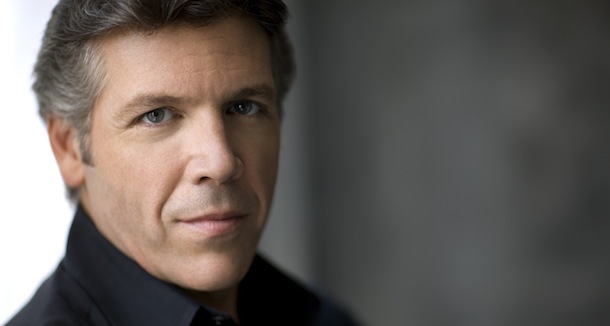 |
| Thomas Hampson, baritone |
I'm late with an appreciation of last weekend's appearance by Thomas Hampson at Celebrity Series (who wrap their season this month with the annual Alvin Ailey visit, btw). And as usual, when I've been dragging my feet, it's because I've got bad news. The great baritone was in fine voice, mind you - and his co-stars for the evening, the Jupiter String Quartet, likewise made a strong impression.
It was their program that didn't quite enthrall me. It featured an appealing, but early, Schubert quartet - as well as an exquisite Webern piece which the Jupiters played superbly. But the centerpiece of the concert - and a New England premiere - was Mark Adamo's setting of Billy Collins' Aristotle, which proved a strange misfire; and the program wrapped with a series of Hugo Wolf lieder that felt like one long appetizer rather than a main course.
On the other hand, it was wonderful just to hear Hampson (if only we could attract him to the Hub for a full operatic performance!). At 57, this lyric baritone hasn't lost his elegant, maple-hued timbre (nor his personal elegance, either), and his sound is still of striking size - indeed, the very walls of Jordan Hall often vibrated in resonance with his power chords (as it were); Hampson might need a microphone in Gillette Stadium, but that's about it.
He also exuded a collegial, collaborative spirit with the Jupiters, who were actually the first to take the stage, with Schubert's Quartet No. 10 in E-Flat. Written when the composer was all of sixteen, the piece pushes at the limits of Haydn with brilliant exuberance. The Allegro is stuffed with sweetly singing lines, while the Adagio is a gently rocking lullaby, and the Scherzo all but kicks up its heels. We can feel the adolescent Schubert showing us everything he can do, which consistently charms; but the final effect is diffuse (if virtuosic). Still, the Jupiters gave a sympathetic, insightful account of the piece, and aptly captured its many colors and moods (particularly when violinist Nelson Lee was in the lead).
The quartet was even more impressive, however, in Anton Webern's far-more-unified Langsamer Satz, ("Slow Movement") another slightly "junior" piece, as it was completed in the shadow of Schoenberg (Webern's teacher) rather than Haydn. Indeed, Langsamer Satz so clearly echoes Transfigured Night in its structure and thrust that you could almost call it Transfigured Lite. That doesn't dull its own haunting appeal, however, and the Jupiters essayed its lush melancholy with remarkable sensitivity.
Then Hampson arrived, for Mark Adamo's Aristotle, set to the poem of the same name by former poet laureate Billy Collins. Now Collins - and his poetic voice - are known and admired quantities, I'd say; indeed, Collins proved one of the most widely read of poet laureates precisely because his approach - populist, sympathetically bemused, lightly ironic - is so accessible to the public at large.
But not to composer Mark Adamo, apparently, who seems to have imagined that Aristotle - which gently ribs that philosopher's pronouncements on high drama through a catalogue of "beginnings," "middles" and "ends" in the comical/tragical mix that makes up actual life - is the equivalent of The Waste Land, or perhaps September 1, 1939. Thus the composer supplied an appealingly sophisticated setting whose anxious modernist tone was utterly inappropriate to the text, and misled Hampson into some curious histrionics (and the wrong kind of parody). I might trust Adamo with Larkin's Aubade; but I have to say Aristotle counts as the oddest misinterpretation of a text by a composer I've ever heard; indeed, Adamo and Collins only came into alignment at the very last minute, when Collins conjures a closing image of death in "outside a cabin, falling leaves."
Oh, well! The second half of the concert was devoted to Hugo Wolf, whose shining success at the end of the nineteenth century has perhaps dimmed as the years have gone by. Still, Hampson and the Jupiters had some of his strongest stuff on offer: the instrumental Italian Serenade (a charming trot through Tuscany, which encounters a few storm clouds but chases them away), and a suite of six songs mostly drawn from the Mörike-Lieder (named after their texts by Eduard Mörike), which was composed in a remarkable artistic burst in Wolf's late maturity (originally for voice and piano, but persuasively re-configured here for string quartet). The Mörike-Lieder retain their appeal, although the texts are mostly standard-issue (German bachelor wanders through the beauty of der Wald, etc.), and while Wolf almost equals, he never quite surpasses Schubert and Schumann. Still, the best song here conceals a surprising sting, which draws from Wolf his best music: in "Auf ein Altes Bild" ("To an Old Picture"), the poet imagines the Virgin and Child at play in "a green landscape," in which "the stem that will become the cross" is already growing, and waiting for them.
There was a happy surprise from Wolf in the encore, too - his “Die Rattenfänger,” ("The Rat-Catcher"), set to Goethe's wicked poem to the Pied Piper of Hamelin. Hampson sang this frisky, unforgettable little number with diabolical wit, and the Jupiters struck just the right note of gleeful malice. It may be the best song Wolf ever wrote, and it was certainly the most captivating performance of the evening.
There was a happy surprise from Wolf in the encore, too - his “Die Rattenfänger,” ("The Rat-Catcher"), set to Goethe's wicked poem to the Pied Piper of Hamelin. Hampson sang this frisky, unforgettable little number with diabolical wit, and the Jupiters struck just the right note of gleeful malice. It may be the best song Wolf ever wrote, and it was certainly the most captivating performance of the evening.
Friday, May 3, 2013
The two must-sees this weekend: BLO's Flying Dutchman and Boston Ballet's Chroma
Chroma at the Royal Ballet - the Boston version may actually be a bit better danced!
The two current "must-sees" of the Boston cultural scene are The Flying Dutchman (at Boston Lyric Opera, see review below), and Wayne McGregor's Chroma (above) at Boston Ballet. Chroma is all jagged, up-to-the-minute postmodern viscera, set to a strikingly sophisticated (though pounding) score by Joby Talbot and Jack White of the White Stripes (with orchestrations by Christopher Austin). I promise you it will be the most-discussed dance of the season; and what's more, it's set in a program of Balanchine classics (Serenade and Symphony in C) whose austere lyricism somehow brilliantly sets off McGregor's extremities. Full review to follow - but don't wait.
Theatres take note: a surprising wrinkle in the "pay what you can" pricing model

Interestingly, a few companies like Moonbox are already integrating charitable giving into their productions. Perhaps there's further synergy to explore on that front!
Wednesday, May 1, 2013
High on the dark wings of The Flying Dutchman
 |
| Soprano Allison Oakes and the chorus in BLO's The Flying Dutchman - Photos: Eric Antoniou |
There is so much to praise in the singing, conducting, and design of Boston Lyric Opera's new production of The Flying Dutchman that Wagner fans are sure to flock to it - and leave flying high. Its success only reminds you that it has been far too long since a full-fledged production of Dutchman - or any Wagner for that matter - has docked at the Hub (his staging demands are often beyond our existing facilities, as I've argued before; we need a new opera house). But honestly, for much of its length, this version is so compelling that you may almost feel the wait has been worth it (and it only runs through this weekend).
I have to say up front, however, that the brilliance of the music and design at BLO is sometimes occluded by directorial decisions that, in a seeming effort to "explain" the opera's psychological mystery, only frustrate its mythic drama. Wagner's libretto (as usual) is built on legend - that of the undead "Flying Dutchman," doomed to sail the seas forever for once invoking, while in a rage, the Devil himself. His only hope of redemption lies in winning the love of a faithful woman - who must love him, of course, even unto death (so you know where this is going). Alas, that archetypal set-up has sparked in director Michael Cavanagh an odd desire to analyze his heroine's psychology in terms that any myth worth its sea salt would leave unspoken. So unfortunately, this production's drama sometimes devolves into case study, which compromises it as a true Wagnerian Gesamtkunstwerk (or "total artwork"); in the end, it's only about two-thirds of one.
But as they say - two outta three ain't bad! So first the good news: a powerhouse cast; a brilliant abstract set; atmospheric projections; and real Wagnerian majesty (though not, perhaps, grandiosity) down in the pit. Music director David Angus has made the intriguing decision to showcase the opera in its original, rarely-heard form; it's the work in which Wagner first found his operatic voice, but the composer tinkered with it repeatedly in later years to make it more symphonically epic, and even more "Wagnerian" than it already was. So some Wagnerites may be surprised to discover that the action is set in Scotland (rather than Norway), and some familiar passages have gone missing. For my part, I appreciated the streamlining of the score, and felt that hearing the work as it first appeared was of high critical interest. I was likewise intrigued by Angus's use of period brass; I only wondered at the elimination of the famous "redemption" motif at the finale (but more on that later).
Even those with quibbles regarding some of these decisions would have to admit, I think, that Angus has drawn a muscular, lustrous sound from his players. Which only threw into higher relief the powerful singing on stage. For BLO has assembled a cast of highly accomplished Wagnerians for what feels like Dutchman's Boston debut. Bass Gregory Frank was (unexpectedly) first among equals as the manipulative father of the heroine - his burnished sound came with a relentless forward thrust, and the jaunty, nearly-cruel opacity of his portrayal felt about right for the script's demands. Only a small step behind were soprano Allison Oakes as Senta, the woman willing to give her life to save her beloved, and bass-baritone Alfred Walker as that restless, damned mariner. Both were often riveting; Oakes has the power (and then some) required to cut through a Wagnerian orchestration, and there was a wildness to her top notes that was at times thrilling (no wonder she's heading to the Wagnerian Valhalla of Bayreuth later this year). Walker was more disciplined, and appropriately brooding; to be honest, at times I felt he lacked distinctive color, but his resonance and clarity more than made up for that.
There was also remarkable singing in supporting roles - Alan Schneider made a piercingly lyrical cameo of the Steersman, Chad Shelton was subtly engaging as Senta's former suitor, and Anne McMahon Quintero was often moving as her nurse. What's more, the chorus sounded absolutely terrific throughout, and as some of Wagner's best writing in The Flying Dutchman is for the chorus, they sometimes seemed to be stealing the show right out from under its accomplished stars.
This was particularly true given their deployment on John Conklin's evocative, abstract set (perhaps the best we've seen from this distinguished designer in some time). Conklin suggested the grappling of Wagner's two frigates with moving rafts of metallic risers - while the sails of the Dutchman's death ship rose up from behind like a blood-red crucifix. Meanwhile Seághan McKay's projections seemed to bring the raging sea right down on our heads (at top). And when the chorus of the dead sang from the masts of the Dutchman's ship, they seemed to dangle from a catwalk high up in the flies of the Schubert - the spookiest moment of all in a compellingly eerie staging.
Given these many high points, it's just too bad that director Michael Cavanagh shifted so much focus to Senta's back story, and a series of invented traumas and daddy-issues (conveyed through dumb shows) which supposedly illuminated the reasons for her self-destruction. To be blunt, Wagner leaves all this out for very good reasons - the main one being that turning Senta into a clinical case history robs her of her mythic and spiritual dimensions. This kind of thing also inevitably undermines any sense of sublimated romance with the Dutchman - which may be why in Walker's portrayal this half-spectre seemed so very alienated. Which also ties into the one real argument I had with conductor David Angus - generally The Flying Dutchman ends with the dead Senta rising toward heaven with her redeemed lover; here, however, Wagner's redemptive motif was missing - as was the redemption itself. I understood Angus's argument for the cut - you could even argue that it buttressed Cavanagh's irritating interpretation. But perhaps some revisions (particularly those very much in the spirit of the original vision) deserve to be preserved. Either way, in the end such caveats amount to only quibbles against what will stand as one of BLO's most memorable recent productions.
But as they say - two outta three ain't bad! So first the good news: a powerhouse cast; a brilliant abstract set; atmospheric projections; and real Wagnerian majesty (though not, perhaps, grandiosity) down in the pit. Music director David Angus has made the intriguing decision to showcase the opera in its original, rarely-heard form; it's the work in which Wagner first found his operatic voice, but the composer tinkered with it repeatedly in later years to make it more symphonically epic, and even more "Wagnerian" than it already was. So some Wagnerites may be surprised to discover that the action is set in Scotland (rather than Norway), and some familiar passages have gone missing. For my part, I appreciated the streamlining of the score, and felt that hearing the work as it first appeared was of high critical interest. I was likewise intrigued by Angus's use of period brass; I only wondered at the elimination of the famous "redemption" motif at the finale (but more on that later).
Even those with quibbles regarding some of these decisions would have to admit, I think, that Angus has drawn a muscular, lustrous sound from his players. Which only threw into higher relief the powerful singing on stage. For BLO has assembled a cast of highly accomplished Wagnerians for what feels like Dutchman's Boston debut. Bass Gregory Frank was (unexpectedly) first among equals as the manipulative father of the heroine - his burnished sound came with a relentless forward thrust, and the jaunty, nearly-cruel opacity of his portrayal felt about right for the script's demands. Only a small step behind were soprano Allison Oakes as Senta, the woman willing to give her life to save her beloved, and bass-baritone Alfred Walker as that restless, damned mariner. Both were often riveting; Oakes has the power (and then some) required to cut through a Wagnerian orchestration, and there was a wildness to her top notes that was at times thrilling (no wonder she's heading to the Wagnerian Valhalla of Bayreuth later this year). Walker was more disciplined, and appropriately brooding; to be honest, at times I felt he lacked distinctive color, but his resonance and clarity more than made up for that.
 |
| The Dutchman descends from his haunted barque. |
This was particularly true given their deployment on John Conklin's evocative, abstract set (perhaps the best we've seen from this distinguished designer in some time). Conklin suggested the grappling of Wagner's two frigates with moving rafts of metallic risers - while the sails of the Dutchman's death ship rose up from behind like a blood-red crucifix. Meanwhile Seághan McKay's projections seemed to bring the raging sea right down on our heads (at top). And when the chorus of the dead sang from the masts of the Dutchman's ship, they seemed to dangle from a catwalk high up in the flies of the Schubert - the spookiest moment of all in a compellingly eerie staging.
Given these many high points, it's just too bad that director Michael Cavanagh shifted so much focus to Senta's back story, and a series of invented traumas and daddy-issues (conveyed through dumb shows) which supposedly illuminated the reasons for her self-destruction. To be blunt, Wagner leaves all this out for very good reasons - the main one being that turning Senta into a clinical case history robs her of her mythic and spiritual dimensions. This kind of thing also inevitably undermines any sense of sublimated romance with the Dutchman - which may be why in Walker's portrayal this half-spectre seemed so very alienated. Which also ties into the one real argument I had with conductor David Angus - generally The Flying Dutchman ends with the dead Senta rising toward heaven with her redeemed lover; here, however, Wagner's redemptive motif was missing - as was the redemption itself. I understood Angus's argument for the cut - you could even argue that it buttressed Cavanagh's irritating interpretation. But perhaps some revisions (particularly those very much in the spirit of the original vision) deserve to be preserved. Either way, in the end such caveats amount to only quibbles against what will stand as one of BLO's most memorable recent productions.
Subscribe to:
Posts (Atom)